


Japan Grand Prix – 2026 Business Aviation Destination Guide
Impact Summary
- The 2026 Japanese Grand Prix will take place April 3–5 at Suzuka Circuit in Mie Prefecture, southwest of Nagoya.
- Nagoya Chubu Centrair (RJGG) is the closest airport and the primary choice for most business aviation operators attending the race.
- Parking at RJGG consistently fills during Formula 1 weekend, and late trip decisions may result in limited or unavailable parking.
- Osaka Kansai (RJBB) currently has a 72-hour parking restriction, limiting its usefulness for operators needing longer stays.
- Heavy ground traffic around Suzuka Circuit during race weekend makes helicopter transfers or pre-arranged car-with-driver services important planning considerations.
Key Planning Questions
Which airport is best for the Japanese Grand Prix?
RJGG is the closest airport to Suzuka Circuit and the primary gateway used by operators attending the race. However, parking demand during Formula 1 weekend is extremely high and availability may become limited. RJBB may still be used for shorter stays, but the airport currently enforces a 72-hour parking limit, which restricts its practicality for longer missions.
When should airport slots be requested?
Slot applications for operations between March 10 and April can already be submitted. Slot allocation results are typically released toward the end of the month following review by the airport authority.
Can helicopter transfers reduce travel time to the circuit?
Yes. Helicopter transfers are commonly used during race weekend because surface traffic around Suzuka can add significant delays for ground transportation.
Why the Japanese Grand Prix Requires Early Business Aviation Planning
Suzuka Circuit is one of Formula 1’s most iconic venues. Its unique figure-eight layout and famous corners including the S Curves, Degner, and 130R have played decisive roles in many championship battles.
From an aviation planning perspective, however, the primary challenge is logistics rather than the race itself.
Unlike Grand Prix venues located in large global aviation hubs, Suzuka sits outside Japan’s largest aviation gateways, meaning airport capacity and regional infrastructure must be carefully planned.
“Many operators initially assume the airport logistics will be similar to Tokyo,” said Hiroshi “Higashi” Higashiyama, Representative Director of Universal Aviation Japan. “But Nagoya’s aviation infrastructure is smaller, so planning early becomes much more important when major events like the Grand Prix bring additional traffic into the region.”
Primary Airport and Alternate Planning
Operators attending the Japanese Grand Prix typically plan operations through one of two airports:
- Nagoya Chubu Centrair (RJGG) – approximately one hour from Suzuka Circuit
- Osaka Kansai (RJBB) – approximately 2.5 hours from Suzuka Circuit
“Most operators prefer RJGG because of its proximity to Suzuka,” Higashi said. “However, parking demand during the Formula 1 period can become very tight, so planning flexibility is important.”
Nagoya Chubu Centrair (RJGG)
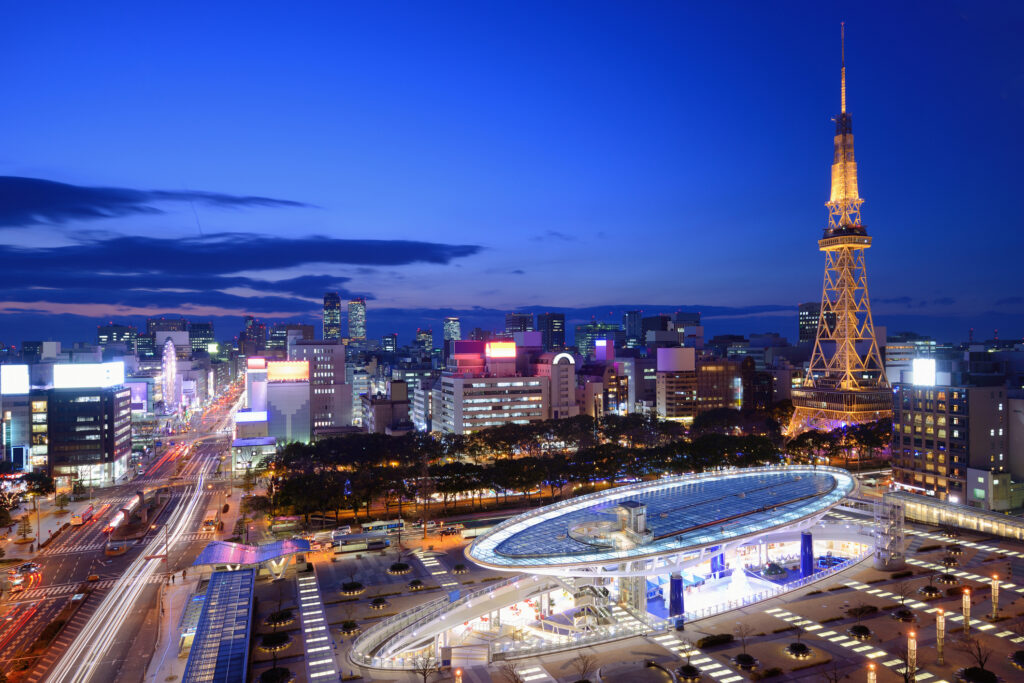
RJGG is the closest major airport to Suzuka Circuit and is typically the preferred airport for passengers attending the race.
Distance to Suzuka Circuit: approximately one hour by car
Operational highlights:
- Airport of Entry (AOE)
- 24-hour operations for Stage 3 aircraft and above
- Airport slots required for all arrivals and departures
- Slot deviation tolerance of ±30 minutes
Although RJGG supports regular business aviation activity, parking demand increases significantly during Formula 1 weekend.
“During the Formula 1 period, parking at Chubu Centrair regularly reaches full capacity,” Higashi explained. “Operators who delay trip decisions may find that parking is already unavailable or that operations must be adjusted.”
In some cases, depending on ground handling capacity and airport congestion, aircraft movements may also be limited or refused.
Operators should also be aware of scheduled runway construction closures at RJGG.
Runway construction closures:
- Every Saturday and Sunday
- 23:50–06:00 local time
- No arrivals or departures permitted during this period
These closures may affect late-night arrivals or departures during race weekend and should be considered during schedule planning.
Passenger use of the General Aviation Terminal (PAX GAT) also requires advance coordination. Applications must be completed by 12:00 local time the day before arrival, meaning requests should typically be submitted at least two days prior to the operation.
Osaka Kansai (RJBB)
Osaka Kansai International Airport serves as the most common alternate airport when operations cannot be accommodated at RJGG.
Distance to Suzuka Circuit: approximately 2.5 hours by car
Operational highlights:
- Airport of Entry
- 24-hour operations
- Airport slots required
- Slot deviation tolerance of ±30 minutes
- Current maximum parking duration of 72 hours
“Kansai can still support shorter-duration operations,” Higashi said. “But with the current 72-hour parking limitation, operators planning longer stays should not assume it will work as a primary parking solution.”
Ground handling services and jet fuel are readily available, and the airport’s infrastructure can accommodate international business aviation traffic.
Additional Regional Airport Consideration: Nagoya Airfield (RJNA)
Nagoya Airfield (RJNA) is another airport located in the Nagoya metropolitan area. However, it is generally considered a lower-priority option for international business aviation operations during major events.
RJNA is not an Airport of Entry, meaning CIQ (customs, immigration, and quarantine) arrangements must be specially coordinated in advance.
While CIQ arrangements can theoretically be requested with as little as three days’ notice, staffing shortages mean this is not realistically feasible in practice. Even with one week or one month of advance notice, there remains a high likelihood that CIQ cannot be accommodated, and last-minute schedule changes are extremely difficult to manage.
Operations at RJNA are generally limited to those with a clear business purpose, and authorities require a business title for entry. It is uncertain whether event-related travel to the Grand Prix would be considered a qualifying business operation, making approval far from guaranteed.
For these reasons, RJNA is generally considered the lowest-priority option for operators planning Grand Prix travel.
Airport Slot Planning
Japan uses a structured airport slot allocation system at many major airports.
Slot applications for operations between March 10 and April can now be submitted. Final allocation results are typically released near the end of the month following review by the airport authority.
“In Japan, slot timing is predictable, but planning discipline matters,” Higashi said. “Operators who wait until later in the process may find their preferred arrival windows are already taken.”
Approved airport slots generally allow a ±30-minute tolerance, so schedules should be built with appropriate buffer time.
Parking Strategy for Race Weekend
Parking availability becomes one of the most important operational considerations during the Japanese Grand Prix.
Because parking at RJGG frequently reaches full capacity during the event period, some operators may choose to drop passengers and reposition aircraft to another airport depending on availability.
“Repositioning is sometimes part of the planning strategy during major events,” Higashi said. “If operators plan early and remain flexible, the operation usually remains manageable.”
Working with a trip support provider early in the planning cycle helps identify parking availability and repositioning strategies if needed.
Helicopter Transfers and Ground Transportation
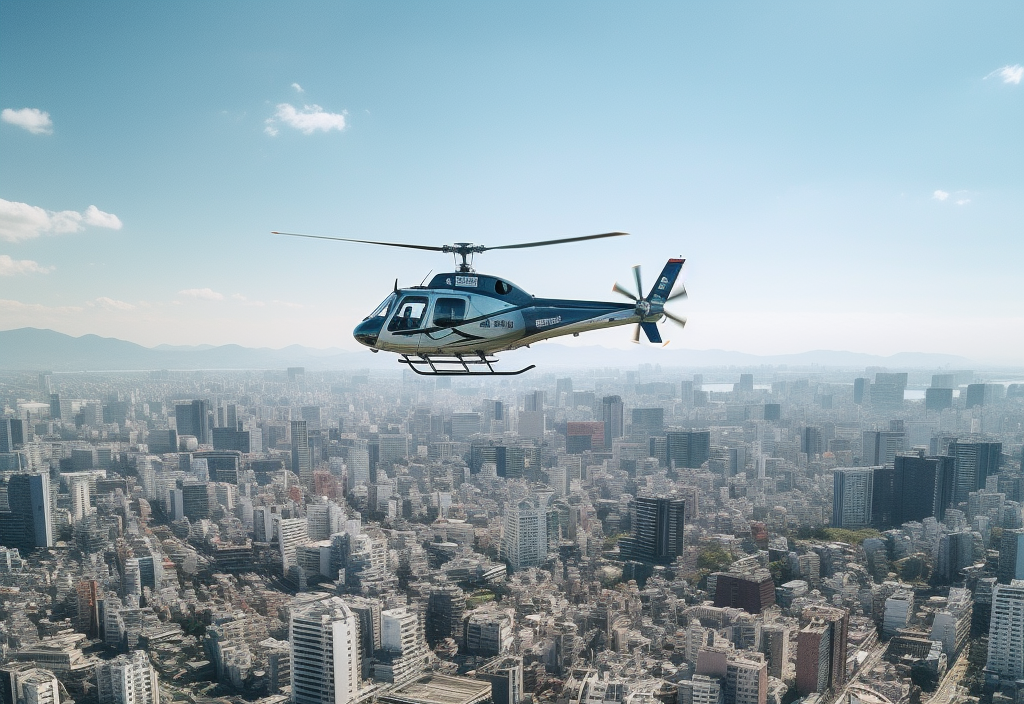 Traffic congestion around Suzuka Circuit becomes significant during qualifying sessions and race day.
Helicopter transfers are frequently used by teams and VIP passengers to reduce travel time.
Approximate helicopter transfer times include:
- RJGG to Suzuka Circuit: about 15 minutes
- Nearby helipads: approximately 30 minutes
- Osaka region: approximately 60 minutes
However, helicopter transfers operate under visual flight rules (VFR), meaning weather conditions can affect availability.
If weather conditions prevent helicopter operations, operators should anticipate the possibility of switching to ground transportation, which may introduce delays of three to four hours depending on traffic conditions.
For operators using ground transportation, pre-arranged car-with-driver services are strongly recommended.
Rental vehicles are available but are generally less practical for visitors unfamiliar with local traffic conditions and congestion patterns.
Hotel Planning
Nagoya serves as the primary accommodation base for teams, media, and spectators attending the Japanese Grand Prix.
Major international hotel chains are available, but availability becomes limited quickly as race weekend approaches.
“Hotels in Nagoya fill quickly for race weekend,” Higashi noted. “Once teams, sponsors, and media begin confirming plans, availability can tighten much faster than many visitors expect.”
Operators should book accommodations as early as possible and coordinate transportation to the circuit in advance.
Most Common Planning Mistakes
Even experienced operators occasionally encounter avoidable challenges when planning missions to the Japanese Grand Prix.
According to Higashi, several patterns appear frequently:
- Waiting too long to confirm hotels or transportation
- Assuming parking availability will remain open at RJGG
- Underestimating traffic congestion near Suzuka Circuit
“The airport operations themselves are usually straightforward,” Higashi said. “But the surrounding logistics—hotels, transport, and passenger movement—are what tend to surprise first-time visitors.”
Bottom Line for Operators
The 2026 Japanese Grand Prix at Suzuka Circuit (April 3–5) will again bring significant international aviation activity to the Nagoya region.
For most operators, Nagoya Chubu Centrair (RJGG) remains the preferred airport due to its proximity to Suzuka Circuit, although parking demand during the Formula 1 period can become extremely tight. Osaka Kansai (RJBB) may serve as an alternate for shorter-duration missions but currently has a 72-hour parking restriction that limits its usefulness for longer stays.
“With early planning, operations to the Japanese Grand Prix are generally very manageable,” Higashi said. “The key is coordinating airport slots, parking, and transportation logistics well in advance.”
Universal Aviation Japan can assist operators with planning and coordinating missions to the Japanese Grand Prix.