

2026 G20 Miami Summit: What business aviation operators should arrange now
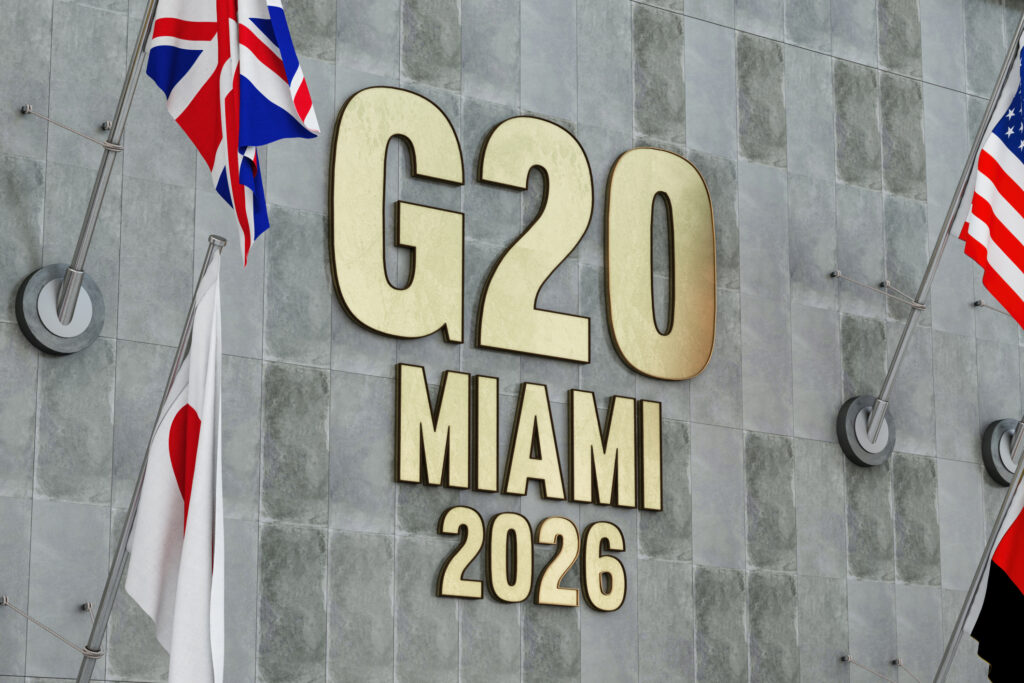
The 2026 G20 Leaders’ Summit will take place Dec. 14 to 15 at Trump National Doral Miami in Doral, Florida. Business aviation operators should prepare for potential airspace restrictions, increased security, and ground transportation disruptions across South Florida.
The summit has been designated a National Special Security Event (NSSE), with the US Secret Service coordinating security preparations. While G20-specific FAA flight restrictions have not yet been published, authorities have warned that road closures and other ground security measures could begin as early as Dec. 10.
Operators can start securing aircraft parking, customs arrangements, and ground transportation now.
What operators need to know
- Airspace: Temporary flight restrictions (TFRs) could affect multiple South Florida airports. Boundaries, effective dates, and authorization requirements remain unconfirmed.
- Airport options: Miami-Opa Locka Executive (KOPF) and Miami International (KMIA) provide convenient access to Doral. Miami Executive (KTMB) is another option for aircraft parking.
- Parking: December is historically a busy period for Miami-area business aviation. Confirm availability before finalizing the itinerary.
- Ground access: NW 87th Avenue and NW 36th Street are expected to experience significant disruptions, including potential closures, checkpoints, and detours.
- Planning window: Allow for possible operational impacts before and after the official Dec. 14 to 15 summit dates.
What should operators arrange now?
Operators should:
- Request aircraft parking. Confirm availability for the entire stay and whether approval is subject to additional security restrictions.
- Evaluate repositioning options. Identify airports capable of accommodating the aircraft if overnight parking is unavailable.
- Review arrival and departure dates. Previous high-security international events have involved aviation restrictions extending beyond the official event dates.
- Confirm customs arrangements. Verify US Customs and Border Protection (CBP) hours, permission-to-land procedures, and required advance notice.
- Book ground transportation and accommodations. Coordinate passenger transfers with providers familiar with Doral and allow flexibility for checkpoints and road closures.
What airspace restrictions could affect Miami?
During the 2023 APEC Summit in San Francisco, certain aircraft accessing Oakland International were required to complete TSA gateway screening at designated airports. The September 2026 United Nations General Assembly in New York involved overlapping TFRs, airport-specific operating procedures, and TSA gateway screening for certain helicopter and seaplane operations.
Based on these previous international events, operators should prepare for three potential complications:
- Airport access: An aircraft with confirmed parking may still be unable to arrive or depart during an active TFR.
- Additional authorization: Some operations could require advance screening, special procedures, or specific flight authorization.
- Repositioning: An alternate airport may fall within the same restricted airspace as the primary arrival airport.
These are historical precedents, not confirmed Miami G20 requirements. The FAA’s final NOTAMs will determine which airports are affected, when restrictions apply, and what procedures operators must follow.
Operators should monitor the FAA TFR website as the summit approaches.
Which Miami airport should operators use?
Under normal conditions, Miami-Opa Locka Executive (KOPF), Miami International (KMIA), and Miami Executive (KTMB) do not require airport slots or prior permission (PPR) for private Part 91 operations. International arrivals remain subject to applicable CBP permission-to-land and advance notification requirements.
Differences in customs procedures, aircraft parking, operating hours, and access to Doral should guide airport selection.
Miami-Opa Locka Executive Airport (KOPF)
KOPF is one of Miami’s principal business aviation airports and is conveniently located near Trump National Doral.
The airport operates 24 hours daily. CBP services are normally available from 9 AM to midnight local. International arrivals must obtain CBP permission to land at least two hours before departing the foreign airport, with a 30-minute early or late arrival tolerance.
KOPF’s dedicated business aviation facilities make it a logical first option, although operators should confirm overnight parking and customs availability for their specific schedule.
Miami International Airport (KMIA)
KMIA provides another convenient passenger arrival option, with 24-hour airport operations and customs services.
International arrivals must initially block at the designated CBP ramp unless otherwise authorized. Passengers and crew then clear through a Federal Inspection Services facility separate from the FBO and main terminal.
CBP permission to land must be obtained at least two hours before departure from the foreign airport. Approved arrival times have a 30-minute early or late tolerance.
Operators should account for the separate inspection process when coordinating passenger pickups, particularly if security restrictions affect arrival schedules.
Miami Executive Airport (KTMB)
KTMB, southwest of Doral, is farther from the summit venue but is worth considering for overnight parking or repositioning.
The airport normally operates from 6 AM to 9 PM local, with operations outside those hours available on request.
Although December is among its peak months, International Flight Center reports that overnight parking shortages are uncommon under normal conditions. Availability during the G20 still requires confirmation.
CBP normally operates from 10 AM to 8 PM daily. International flights arriving within an hour of customs closing may be denied permission to land or diverted. Permission to land must be obtained at least two hours before departure from the foreign airport, with a 30-minute early or late arrival tolerance.
What about repositioning outside Miami?
Operators unable to secure parking at their preferred airport should evaluate alternatives outside the potential summit security area.
However, moving farther north does not necessarily eliminate security concerns. Separate presidential restrictions around Palm Beach and Mar-a-Lago could affect some northern airports.
Confirm both the alternate airport and proposed routing against all applicable TFRs before finalizing repositioning plans.
How will ground transportation be affected?
The City of Doral has warned that security measures could begin as early as Dec. 10.
NW 87th Avenue and NW 36th Street are expected to be among the most affected roads. Closures, detours, vehicle screening, and access restrictions could complicate transfers between Miami-area airports and Trump National Doral.
Doral Central Park is also scheduled to close Dec. 11 to 16 for summit-related operations.
Operators should coordinate passenger transportation with drivers familiar with local security arrangements and monitor the City of Doral’s official G20 advisories for updated maps and access information.
Crew hotel selection should also account for possible road closures and restricted routes between the airport and accommodation.
What should operators do next?
The immediate priority is to confirm airport parking and handling while maintaining flexibility for the FAA’s final security restrictions. KOPF and KMIA offer convenient access to Doral, while KTMB is worth evaluating for overnight parking. None should be considered exempt from potential summit-related airspace restrictions.
This article will be updated when the FAA publishes additional G20 operating requirements.
For assistance coordinating Miami-area flights, including airport access, aircraft parking, customs, repositioning, and ground transportation, existing customers can contact their World Fuel | Universal Trip Support team. New customers can request trip support information.