


Caribbean business aviation guide: 2026-2027 peak-season planning
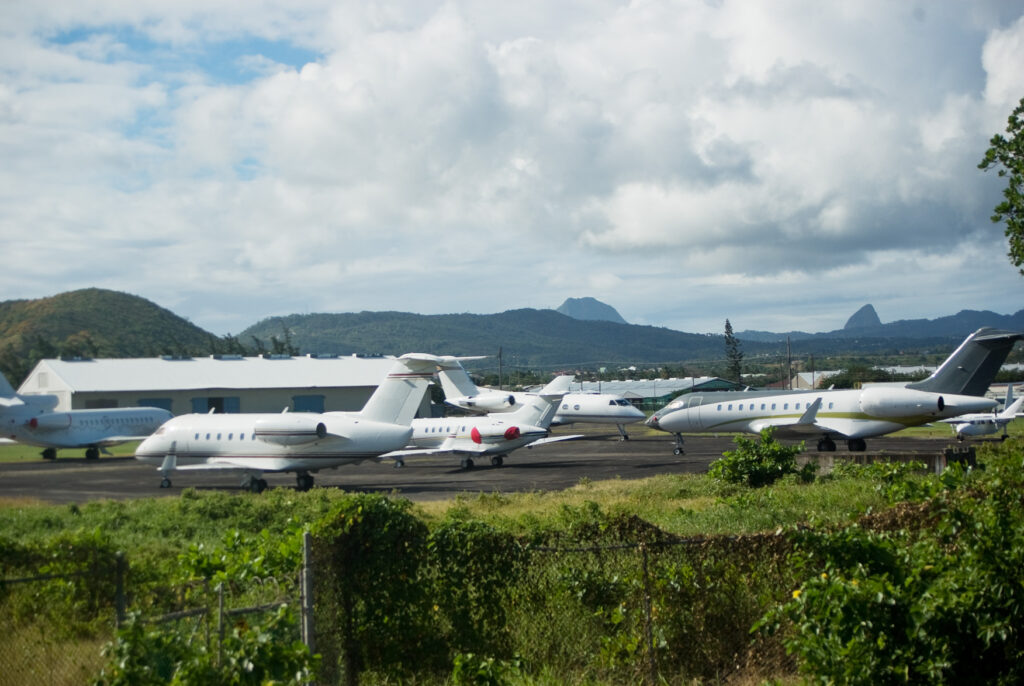
For business aviation operators flying to the Caribbean during the 2026-2027 peak season, securing permission to land is only part of the planning process. Aircraft parking, customs availability, ground transportation, crew accommodations, and the ability to reposition can determine whether an itinerary works as planned.
The busiest travel periods generally run from late November through mid-April, with particularly high demand around Thanksgiving, Christmas, New Year’s, and spring break. Airports such as St. Maarten (TNCM) and Grand Cayman (MWCR) can face seasonal parking constraints, while others have different challenges, including slot requirements, limited customs hours, and aircraft operating restrictions.
This guide covers the primary considerations for planning Caribbean business aviation operations during the upcoming winter season, including which airports require the most advance coordination and what operators should arrange before departure.
What operators need to know
- Confirm parking separately from landing approval. An airport may accept an arrival without being able to accommodate the aircraft overnight.
- Plan repositioning early. Nearby alternatives may have their own runway limitations, parking constraints, customs requirements, or operating-hour restrictions.
- Do not confuse a 24-hour airport with 24-hour passenger processing. Customs, FBO, and VIP terminal operating hours can differ significantly from published airport hours.
- Build weather flexibility into the itinerary. Winter cold fronts, trade winds, localized showers, and other changing conditions can affect arrivals, departures, and inter-island movements.
- Arrange ground services before arrival. Fuel, catering, ground transportation, and crew accommodations may require additional lead time during busy holiday periods.
- Confirm permits and passenger reporting for every leg. Private and charter flights can face different requirements, and regional systems such as CARICOM MDEX do not replace destination-specific immigration procedures.
When is Caribbean business aviation peak season?
The Caribbean’s principal business aviation travel season typically begins around Thanksgiving and extends through mid-April. Demand is especially concentrated around Christmas and New Year’s, Presidents Day weekend, and spring break.
Individual destinations have different peak periods. St. Barthélemy identifies Dec. 15 through April 15 as its high season, while Antigua experiences increased parking demand from November through April. Grand Cayman reports its most significant seasonal parking pressure in December and January.
Holiday operations require particularly early planning. At St. Maarten, local guidance identifies Nov. 15 to 25 and Dec. 15 to Jan. 10 as advance-planning periods. Operators are encouraged to request Christmas and New Year’s parking as early as August.
The timing of passengers’ travel can also complicate operations. An aircraft may arrive before the busiest holiday period but need to depart or reposition while parking demand and airport traffic are at their highest.
Which Caribbean airports face the greatest parking challenges?

Parking availability varies considerably across the Caribbean. Some airports face concentrated holiday shortages, while others generally have adequate overnight space but restrict how long an aircraft may remain.
St. Maarten (TNCM)
Princess Juliana International Airport is among the destinations requiring the earliest holiday planning. Thanksgiving, Christmas, and New Year’s travel can create substantial demand for general aviation parking and aircraft movements.
Although overnight parking shortages are not a routine year-round condition, the holiday periods require close coordination. Operators without confirmed overnight parking may be limited to approximately 60 to 90 minutes on the ground for passenger drop-off before repositioning.
Both airport slots and prior permission required (PPR) approval apply. Advance coordination is particularly important when aircraft registrations, schedules, or parking requirements change.
Grand Cayman (MWCR)
Owen Roberts International Airport can experience overnight parking shortages during December and January. Both slots and PPR are required, and Cayman Brac (MWCB) may be considered as a repositioning alternative when appropriate.
Operators should also account for ground-access restrictions. The general aviation terminal and ramp are not available before 0700 local, preventing crews from completing fueling or preflight activities ahead of the airport’s normal opening.
Saint Lucia (TLPC and TLPL)
Saint Lucia offers two airports with different operational characteristics.
George F. L. Charles Airport (TLPC), near Castries, has a constrained ramp and aircraft-size limitations, including a maximum takeoff weight of 73,000 pounds and a wingspan limit of 28.5 meters. Overnight parking is assessed individually, and aircraft must carry a compatible towbar.
Hewanorra International Airport (TLPL) generally offers more parking flexibility, with aircraft parking permitted for up to four weeks. However, operators should account for the approximately 75-minute road transfer between the airports and the possibility of customs sealing aircraft doors overnight.
St. Thomas (TIST)
Cyril E. King Airport can experience overnight parking shortages during the December-through-March peak period. San Juan (TJSJ) and St. Croix (TISX) are potential repositioning alternatives, subject to aircraft parking and applicable customs arrangements.
Aircraft suitability also warrants attention. NOTAMs published through April 30, 2027, establish a landing distance available of 3,870 feet on Runway 28 and 6,592 feet on Runway 10. A section of the main apron taxilane between gates 9 and 11 is also restricted to aircraft with wingspans of 115 feet or less.
Where is overnight parking generally more available?
Feasibility-IQ reports that overnight parking shortages are rare at several other destinations, including Nassau (MYNN), Barbados (TBPB), Montego Bay (MKJS), St. Kitts (TKPK), La Romana (MDLR), and Santo Domingo (MDSD).
However, relatively available parking does not mean unrestricted operations. Barbados limits aircraft parking to one week, while La Romana and Santo Domingo require both slots and PPR. Each airport must be evaluated against the specific aircraft and itinerary.
What happens if overnight parking is unavailable?
When an aircraft cannot remain at its passenger destination, repositioning may be necessary. The aircraft drops off passengers, departs to another airport for parking, and returns for pickup.
The most appropriate alternate is not necessarily the closest airport. Aircraft performance, available parking, customs procedures, operating hours, and ground support must all be considered before committing to a repositioning plan.
| Passenger destination | Potential alternative | Key planning consideration |
|---|---|---|
| St. Maarten (TNCM) | Grand Case (TFFG) or Antigua (TAPA) | Grand Case has a short runway and 48-hour customs notice requirement. Antigua may also face seasonal parking shortages. |
| Grand Cayman (MWCR) | Cayman Brac (MWCB) | Confirm aircraft suitability, parking, permissions, and available ground services. |
| Castries, Saint Lucia (TLPC) | Hewanorra (TLPL) | TLPL has more parking flexibility but may require a longer passenger ground transfer. |
| St. Thomas (TIST) | St. Croix (TISX) or San Juan (TJSJ) | Check overnight parking and routing-dependent US customs requirements. |
| Punta Cana (MDPC) | La Romana (MDLR) | Parking shortages are rare at MDLR, but slots, PPR, and customs operating hours require coordination. |
Before confirming a repositioning airport, operators should establish where passengers will be dropped off, how the aircraft will be handled at the alternate, where the crew will stay, and when the aircraft can return.
That decision should be made before the passenger itinerary is finalized whenever possible. Waiting until arrival to resolve a parking problem can leave fewer workable options.
How does Caribbean weather affect business aviation operations?

The winter months generally offer more favorable tropical-weather conditions than the Atlantic hurricane season, but Caribbean flying still requires careful weather planning.
Trade winds, passing showers, changing visibility, and winter frontal systems can affect individual airports differently. Conditions at the passenger destination may be suitable while a nearby repositioning airport experiences different winds, cloud cover, or precipitation.
Winter winds and cold fronts
Trade winds are a regular feature of Caribbean weather and can influence runway selection, approach conditions, and passenger comfort. During winter, cold fronts moving south from North America may also bring stronger winds, showers, and changing visibility to parts of the northern Caribbean.
These conditions are especially relevant when evaluating smaller airports, short runways, and repositioning alternatives where aircraft performance margins may be more restrictive.
Localized weather differences
Weather can vary considerably between islands and even between airports on the same island. Mountainous terrain, coastal exposure, and localized showers can produce different conditions over relatively short distances.
Operators planning multiple Caribbean stops should assess forecasts, alternates, and fuel requirements for each leg rather than assuming that favorable conditions at one destination apply throughout the itinerary.
Hurricane season considerations
The official Atlantic hurricane season runs from June 1 through Nov. 30. The principal winter peak season falls largely outside that period, but operations around Thanksgiving can still overlap the end of hurricane season.
For late-November flights, operators should continue monitoring tropical weather and have contingency plans for routing or schedule changes. Outside the official season, other weather systems can still affect operations.
What permits and regulatory requirements should operators expect?
Landing permit requirements vary by destination and type of operation. A permit exemption for a private non-revenue flight should not be interpreted as an exemption for charter operations.
Many Caribbean destinations require charter landing permits even when private flights do not. Charter operators should confirm application requirements, supporting documents, and processing times before scheduling a flight.
Two examples illustrate why these distinctions matter.
The Bahamas: Nonscheduled commercial operators must obtain an Air Transport License directly from the Civil Aviation Authority Bahamas. A trip support provider cannot submit the application on the operator’s behalf. Foreign-registered charter aircraft also cannot conduct domestic commercial carriage between Bahamian airports.
French Caribbean territories: Charter flights to St. Barthélemy and other specified French Caribbean destinations require landing authorization. These authorizations are issued for six-month periods, and inspections may be conducted to verify compliance with their conditions.
In the Dominican Republic, charter flights must maintain the same operating classification on arrival and departure. Operators should identify the nature of the flight when requesting handling so that any required permits and fees can be arranged.
What customs and immigration issues cause delays?
Customs and immigration procedures are not uniform across the Caribbean. Operating hours, advance notice, passenger documentation, and clearance locations can vary even between airports in the same country.
One recurring planning mistake is assuming that a 24-hour airport provides all passenger-processing services throughout the day.
At La Romana (MDLR), for example, the airport operates 24 hours, but normal customs hours are 0800 to 1700 local. Overtime requires prior arrangement. At Santo Domingo (MDSD), airport and customs services operate around the clock, while the VIP terminal has separate operating hours and overtime approval requirements.
Technical stops can also involve more clearance activity than operators expect:
- At Punta Cana (MDPC), all baggage must be removed from the aircraft for customs inspection, including during technical stops.
- At La Romana (MDLR), passengers and crew must disembark and clear customs, even when the aircraft is stopping only for fuel.
- At San Juan (TJSJ), customs arrangements for applicable international flights can add 45 to 90 minutes to a technical stop.
Operators should also prepare required general declarations and passenger information in advance to avoid delays during clearance.
What passenger reporting and electronic entry forms are required?
Caribbean operators may need to comply with multiple reporting systems, depending on their destination and routing. Passenger entry forms, customs declarations, regional APIS reporting, and US eAPIS are distinct requirements.
CARICOM MDEX
CARICOM replaced its former regional eAPIS submission portal with the MDEX system effective Oct. 1, 2026. Operators serving applicable participating destinations should confirm registration, reporting responsibilities, and submission timelines before travel.
MDEX does not replace country-specific customs and immigration forms or US eAPIS requirements.
For additional information, see our guide to CARICOM MDEX requirements for business aviation.
Destination-specific passenger forms
Several Caribbean destinations now require electronic passenger declarations.
- Dominican Republic: Passengers must complete the electronic entry and departure form. Active crew members are exempt. General aviation passengers should select “C3 – Independent Carrier (ICAR)” in the airline field.
- British Virgin Islands: Travelers must complete the electronic immigration and customs form, available within 72 hours of arrival, and present the resulting electronic receipts.
- Barbados: Arriving passengers and crew must complete the online immigration and customs declarations. Paper arrival and departure cards have been discontinued.
- St. Kitts and Nevis: Crew and passengers must complete the online entry forms and provide their QR codes. Crew on quick turns are exempt from this form requirement.
Operators should confirm the appropriate submission process for each passenger and crew member before departure rather than relying on forms completed during a previous Caribbean stop.
What should operators know about returning to the US?
Flights involving Puerto Rico and the US Virgin Islands require particular attention because their customs treatment differs.
Although flights from the US mainland to the USVI are generally treated as domestic, the USVI are outside the US customs territory. Return flights to the mainland may require US eAPIS, advance CBP notification, and customs clearance or authorized pre-inspection, depending on the routing.
Eligible US-registered private and charter aircraft may arrange CBP pre-inspection at St. Thomas (TIST) or St. Croix (TISX) before traveling to the mainland. This is optional and must be arranged in advance. It is subject to aircraft eligibility, operating hours, and other requirements.
Pre-inspection is not available at these airports for aircraft carrying cargo or for flights continuing to San Juan. CBP also retains the authority to reinspect aircraft and passengers after arrival on the mainland.
At San Juan (TJSJ), the airport operates 24 hours, but regular CBP hours are 0800 to 2359 local. International arrivals must obtain applicable CBP landing rights and coordinate clearance before arrival. Part 135 operators should request the appropriate CBP landing rights at least 48 hours ahead.
What should operators plan for fuel and ground handling?

Barbados FBO Universal Aviation
Fuel and ground handling arrangements should be made alongside parking and airport approvals, not after the flight schedule has been finalized.
At busy airports, aircraft may have a limited ground window before being required to depart. If fuel is needed during that window, operators should confirm the type of fueling service, truck availability, delivery location, and expected turnaround time.
At Tortola (TUPJ), for example, operators planning quick turns are advised to request that a fuel truck be ready on arrival.
At Saint Lucia’s George F. L. Charles Airport (TLPC), fueling is provided by truck, and aircraft must bring a compatible towbar because of limited ramp maneuvering space. Hewanorra (TLPL) offers fueling arrangements that may differ from those at TLPC.
Ground equipment availability should also be checked when repositioning to smaller airports. Grand Case (TFFG), for example, has limited ground equipment and airport staffing, in addition to a relatively short runway.
For multi-stop Caribbean itineraries, operators should confirm fueling and handling arrangements separately at each airport. Availability at a nearby island does not establish the same services or operating conditions at the next destination.
How should ground transportation be arranged?

Ground transportation deserves particular attention during the Christmas and New Year’s travel periods, when resort destinations are busy and passenger schedules may change.
Advance arrangements are advisable for airport transfers, especially when travelers require larger vehicles, multiple pickups, or transportation to villas and resorts outside the main population centers.
Repositioning adds another complication. The airport where passengers arrive may not be the airport where the aircraft remains parked, and the crew may need transportation between the two locations.
In Saint Lucia, for example, the road journey between George F. L. Charles Airport (TLPC) and Hewanorra International Airport (TLPL) is approximately 75 minutes. A decision to reposition from TLPC to TLPL may therefore affect crew transportation, hotel selection, and the schedule for retrieving passengers.
In some Caribbean destinations, travel times can also vary depending on the location of the hotel or resort, road conditions, and local traffic. Operators should confirm driving times with the ground transportation provider rather than relying solely on the distance between the airport and destination.
What about hotels and crew accommodations?
Hotel availability can become an issue during the Caribbean’s winter peak season, particularly around Christmas and New Year’s. Crew accommodations should be secured alongside aircraft parking, especially when an itinerary requires repositioning.
Crew hotel rates can run $300 to $800 per night during peak periods, depending on the island, property, and availability. Operators should confirm current rates, cancellation policies, and minimum-stay requirements before committing to a schedule.
When repositioning, consider whether the crew should stay near the passenger destination or the airport where the aircraft will remain.
Are catering and aircraft services readily available?
Catering options vary considerably across the Caribbean. Larger airports generally have more established aviation catering services, while operators visiting smaller islands may need to source meals from local hotels or restaurants.
When using hotel or restaurant catering, confirm that meals can be prepared and delivered within the aircraft’s departure schedule. Food temperature control, packaging, and compatibility with onboard galley equipment should also be addressed in advance. Restaurant catering containers may not be suitable for reheating or storage onboard.
Special dietary requirements and larger catering orders should be arranged early, particularly during the Christmas and New Year’s peak periods.
Operators should also account for customs and agricultural restrictions when transporting food between islands. The Dominican Republic prohibits the entry of fruits and vegetables, while US Virgin Islands agricultural procedures restrict certain produce and regulate international aircraft waste.
At smaller airports, additional services may also require advance notice. Tortola (TUPJ), for example, offers catering and lavatory servicing, but both must be requested ahead of time.
What security considerations matter in the Caribbean?
Security risks vary significantly by island and location. Operators should evaluate both airport security and the arrangements for transporting passengers and crew between the airport, hotel, and final destination.
As of October 2026, the US State Department advises increased caution due to crime in several popular business aviation destinations, including Jamaica, The Bahamas, the Dominican Republic, Saint Lucia, and Turks and Caicos. Risks include armed robbery, theft, and violent crime, although conditions vary considerably within each destination.
Ground transportation deserves particular attention. UK government guidance warns of travelers being followed and robbed between airports and private accommodations in Jamaica. Operators should use established transportation providers, confirm pickup arrangements in advance, and assess routes and arrival times when arranging transfers.
For crew accommodations and passenger stays, consider the location and security arrangements of hotels, villas, and other private properties. Supplemental aircraft security may also be appropriate at certain airports, depending on local conditions and the availability of services.
Operators should review current government travel advisories and coordinate destination-specific security requirements with their local ground handler before departure.
Final planning considerations
Successful Caribbean peak-season planning begins with confirming what the airport can actually accommodate, not simply whether the flight can land.
At the busiest destinations, that means securing parking or identifying a workable repositioning option before the passenger itinerary is finalized. At other airports, the deciding factor may be a charter authorization, customs operating hours, aircraft performance limitation, or available ground services.
Weather flexibility, fuel, catering, crew accommodations, and passenger ground transportation should then be coordinated around the confirmed operating plan.
For assistance coordinating Caribbean flights, including airport access, parking, permits, repositioning, and passenger reporting, existing customers can contact their World Fuel | Universal Trip Support team. New customers can request trip support information.
Caribbean airport-by-airport planning cheat sheet
Airports are listed alphabetically by country or territory. Select an airport below to expand its operating guidance.
Times are local. Airport procedures and NOTAMs can change, so confirm flight-specific requirements before departure.
Anguilla: Clayton J. Lloyd (TQPF)
- Hours: 0700 to 1900 local daily; customs operates on the same schedule. APU starts are prohibited before 0630 local.
- Approvals: PPR required; slots not required. Charter flights require a landing permit; private non-revenue flights do not.
- Parking: Christmas and New Year’s availability can be limited. Request confirmation early.
- Aircraft: Runway 11/29 has displaced thresholds that reduce available operating distances; check aircraft performance.
Antigua and Barbuda: V.C. Bird (TAPA)
- Hours: Airport normally 0600 to 2200 local daily. Customs and immigration 0430 to 2200; Port Health 0800 to 2000.
- Approvals: No routine slots or PPR. Charter flights require landing permits; private non-revenue flights do not. APIS reporting is required.
- CIQ: Provide two hours’ prior notice for private flights and prepare the required general declarations and passenger entry documents.
- Parking: Seasonal shortages can occur from November through April; do not assume availability when repositioning from St. Maarten.
- Temporary services: Staffing-related air traffic service changes are published through Dec. 7, 2026. Check current NOTAMs and coordinate expected service levels.
The Bahamas: Nassau (MYNN)
- Hours: 24 hours daily. Peak traffic is typically 0900 to 1100 and 1300 to 1500 local.
- Approvals: No routine slots or PPR. Private non-revenue flights generally do not need landing permits; charter operations require an Air Transport License applied for directly by the operator.
- Parking: Overnight shortages are rare.
- CIQ: 0700 to 2300 local Monday through Friday and 0700 to 2100 on weekends. Arrange clearance outside these hours in advance. Onboard clearance may be available at additional cost by arrangement.
- Documents: Customs and immigration forms, applicable general declarations, airport arrival report, and private aviation Click2Clear requirements. Foreign-registered charter aircraft cannot conduct domestic commercial carriage between Bahamian airports.
Barbados: Grantley Adams (TBPB)
- Hours: Airport and CIQ available 24 hours daily. Peak traffic is 1100 to 1400 and 1800 to 2100 local.
- Approvals: No routine slots or PPR. Charter landing permit required; private non-revenue flights exempt.
- Parking: Overnight shortages rare, but maximum aircraft parking is one week.
- Passenger processing: Complete the Barbados online immigration and customs declarations and provide APIS passenger and crew information.
- Aircraft: Disinsection is required through the applicable residual-treatment or in-flight spray procedure; document treatment on the arrival general declaration. Carry aircraft registration and airworthiness documents, pilot licenses, and aircraft logs.
British Virgin Islands: Tortola (TUPJ)
- Hours: Airport and CIQ normally 0700 to 2200 local daily; overtime available by arrangement.
- Approvals: No routine slots or PPR; APIS required. Confirm charter authorization based on operation.
- Parking: Aircraft park on the main apron; confirm overnight arrangements. San Juan (TJSJ) and St. Thomas (TIST) are potential alternatives.
- Entry forms: Complete the BVI electronic immigration and customs form within the 72-hour prearrival window. Printed or saved electronic receipts are required; manual forms are no longer accepted.
- Operations: Crews unfamiliar with the airport are advised to arrive before sunset. Request a fuel truck in advance for quick turns and prearrange catering and lavatory service.
Cayman Islands: Owen Roberts (MWCR)
- Hours: 0700 to 2100 local daily. General aviation terminal and ramp access are unavailable before 0700, including for fueling or preflight preparation.
- Approvals: Slots and PPR required. Charter flights require a landing permit; private non-revenue flights generally do not.
- Parking: Shortages sometimes occur in December and January. Cayman Brac (MWCB) is a possible alternative subject to confirmation.
- CIQ: Customs 0830 to 2100 local; clearance takes place in the general aviation terminal, not beside the aircraft. Departure security screening applies.
- Documents: Prepare passenger and crew information, required general declarations, and documentation from the previous departure point.
Dominican Republic: La Romana (MDLR)
- Hours: Airport 24 hours daily. Normal customs 0800 to 1700 local; overtime by advance arrangement. Private flights require four hours’ customs notice.
- Approvals: Slots and PPR required. Charter landing permits required except qualifying air ambulance flights and technical stops.
- Parking: Overnight shortages are rare, including in December and January. Potential alternative to Punta Cana; confirm flight-specific parking.
- Technical stops: All passengers and crew must disembark and clear customs, including fuel stops.
- Passenger forms: Complete the Dominican Republic e-ticket and prepare five general declarations for arrival and departure. Active crew are exempt from the e-ticket.
- Charter: Maintain the same flight classification on arrival and departure.
Dominican Republic: Punta Cana (MDPC)
- Hours: Airport and CIQ available 24 hours daily.
- Approvals: Slots and PPR required. Charter landing permit required, except qualifying air ambulance flights and technical stops.
- Parking: Confirm aircraft parking with the Executive Terminal before departure.
- CIQ: All bags must be removed for customs inspection, including during technical stops. Crew and passengers may also be directed to terminal clearance.
- Passenger forms: Complete the Dominican Republic e-ticket; general aviation passengers select “C3 – Independent Carrier (ICAR).” Active crew are exempt. Carry five general declarations for arrival and departure.
- Charter: Maintain the same flight classification on arrival and departure; identify charter flights to the handler for appropriate permission and fees.
Dominican Republic: Santo Domingo (MDSD)
- Hours: Airport and CIQ available 24 hours daily. VIP terminal normally 0700 to 2359 local; overtime requires approval requested at least three business hours before closing.
- Approvals: Slots and PPR required. Charter landing permits required except qualifying air ambulance flights and technical stops.
- Parking: Overnight shortages are rare, including November through April. La Isabela (MDJB) and La Romana (MDLR) are potential alternatives.
- Clearance: Immigration processing may be handled through the terminal rather than beside the aircraft. Send complete general declarations ahead to avoid passenger delays.
- Documentation: Send the handling agent a copy of the ICAO flight plan and carry five general declarations for arrival and departure. Passengers must complete the Dominican Republic e-ticket; active crew are exempt.
- Charter: Maintain the same operating classification for arrival and departure.
Jamaica: Montego Bay (MKJS)
- Hours: 0600 to 2359 local daily. Operations from 0001 to 0559 require prior approval under noise-abatement procedures.
- Approvals: No routine slots or PPR. Charter landing permits required, except air ambulance flights and technical stops without passenger or crew boarding or disembarkation.
- Parking: Overnight shortages are rare. December and January are the busiest months.
- Passenger processing: APIS required. Confirm flight-specific customs and immigration clearance requirements.
- Technical stops: MKJS may suit a fuel stop where the charter landing-permit exemption applies; confirm fueling, service availability, and approved nighttime operations before departure.
Puerto Rico: San Juan (TJSJ)
- Hours: Airport 24 hours daily; normal CBP clearance 0800 to 2359 local, with overtime by approved arrangement.
- Approvals: No routine slots or PPR. International arrivals must obtain applicable CBP landing rights and comply with US reporting requirements.
- CBP: Private arrivals require advance notification. Part 135 international operators should request CBP landing rights at least 48 hours ahead and confirm the required paperwork with the port.
- Clearance: Designated international passenger processing may require aircraft positioning and landside transport. Customs can add 45 to 90 minutes to a technical stop.
- Parking: Overnight aircraft reposition to an FBO parking area after applicable clearance. Confirm space in advance; Aguadilla (TJBQ) is a potential alternative.
- Agriculture: Arrange USDA inspections and regulated international aircraft-waste procedures as required.
Saint Barthélemy: St. Jean (TFFJ)
- Hours: Confirm daylight operating hours and seasonal procedures before scheduling.
- Approvals: Conventional slots and PPR are not routinely required, but separate COHOR winter schedule facilitation applies from Oct. 25, 2026, through March 27, 2027.
- Parking: The winter coordination framework accounts for limited aircraft stands; coordinate the proposed arrival, departure, and parking rather than assuming unrestricted availability.
- Landing permits: Private non-revenue flights are exempt. Charter flights require landing authorization, issued for six-month periods covering specified French Caribbean territories.
- Aircraft: Check runway performance, aircraft suitability, pilot qualification requirements, and current CIQ procedures.
Saint Kitts and Nevis: Robert L. Bradshaw (TKPK)
- Hours: 0600 to 2100 local daily; overtime requires 24 hours’ prior notice.
- Approvals: No routine slots or PPR. APIS required. Confirm applicable charter authorization.
- Parking: Overnight shortages are rare; long-term aircraft parking can be reserved in advance. December through March are peak months.
- Handling: Coordinate mandatory assigned handling and private-jet passenger processing through KAYANJET. Aircraft are marshalled to stands; towing is unavailable.
- CIQ: 0600 to 2100 local, with two hours’ notice for private flights. Complete the online immigration and customs forms and submit QR codes. Quick-turn flight crew are exempt from the online forms.
Saint Lucia: George F. L. Charles (TLPC)
- Hours: Normally 0800 to 2000 local daily, with overtime subject to approval.
- Approvals: PPR required; slots not required. Confirm authorization for charter operations.
- Aircraft suitability: Maximum takeoff weight 73,000 pounds, wingspan limit 28.5 meters, and minimum visibility 6 kilometers. Bring a compatible towbar because ramp maneuvering is restricted.
- Parking: Overnight space is limited and assessed case by case. Consider Hewanorra (TLPL) for repositioning.
- CIQ: Normally 0800 to 2000 local. Complete the Saint Lucia electronic immigration form and send required insurance and indemnity documentation to the airport authority at least 24 hours ahead.
Saint Lucia: Hewanorra (TLPL)
- Hours: Normally 0800 to 2000 local daily. Overtime is subject to approval.
- Approvals: No routine slots or PPR during normal hours; APIS required.
- Parking: Overnight shortages are rare; maximum parking is four weeks. This can be a more flexible option than Castries (TLPC).
- CIQ: 0800 to 2000 local, with advance arrangements for overtime. Customs may seal aircraft doors overnight; an authorized agent must remove the seals before access.
- Handling: Carry a compatible towbar. Allow for the ground-transfer time between Hewanorra and Castries if passengers are using the other airport.
Saint Martin (French): Grand Case (TFFG)
- Approvals: PPR required; no routine slots. Charter flights require landing authorization, generally issued for six-month periods covering specified French Caribbean destinations.
- CIQ: Allow at least 48 hours’ advance notice to arrange customs and immigration; supply complete crew and passenger details.
- Aircraft suitability: Approximately 3,900-foot runway, PCN 16, limited ground equipment, and small-aircraft parking stands. Aircraft performance and stand availability must be evaluated before using TFFG as a TNCM alternate.
- Parking: Some stands require additional prior permission, and apron movements follow controlled routing procedures.
- Hours: Confirm operating hours directly before planning a movement.
Sint Maarten: Princess Juliana (TNCM)
- Hours: 0700 to 2100 local daily; overtime between 2101 and 2200 may be arranged with 24 hours’ notice.
- Approvals: Slots and PPR required. Charter flights require landing permits, except qualifying technical stops.
- Parking: Thanksgiving, Christmas, and New Year’s require early planning. Advance-planning periods include Nov. 15 to 25 and Dec. 15 to Jan. 10; request seasonal parking as early as August where possible.
- Quick turns: Without confirmed parking, operators may be limited to approximately 60 to 90 minutes on the ground before repositioning.
- CIQ: 0700 to 2100 local. An online customs clearance form must be submitted at least two hours before arrival and departure for applicable noncommercial operations.
Turks and Caicos Islands: Providenciales (MBPV)
- Hours: 0600 to 2000 local daily. Arrangements requested after 1930 may be treated as overtime, with additional charges and holiday considerations.
- Approvals: Slots required; routine PPR not required. Charter landing permits required; private non-revenue flights exempt.
- Parking: Overnight shortages are rare; confirm arrangements for the December-to-April high season.
- CIQ: Confirm customs service hours for the day of operation and any overtime fees. Prepare required general declarations and crew/passenger details. Disembarking crew must use the international clearance and security process.
US Virgin Islands: St. Croix (TISX)
- Hours: 0700 to 2300 local daily.
- Approvals: No routine slots or PPR; applicable US eAPIS and customs requirements depend on routing.
- Parking: Potential alternative to St. Thomas, subject to confirming space with the handler.
- CBP: Routine clearance generally 0700 to 1800 local Monday through Friday. Weekend and after-hours services require prior approval. Private arrivals require advance notification; submit overtime requests at least 24 hours ahead.
- Pre-inspection: Eligible US-registered private and charter aircraft may arrange pre-inspection for mainland US flights during regular hours, with prior coordination and an IFR flight plan. Service is not available for cargo operations or flights continuing to San Juan.
- Agriculture: Follow USDA inspection and regulated-waste requirements before departing for the US mainland.
US Virgin Islands: St. Thomas (TIST)
- Hours: Airport 0700 to 2300 local; tower 0700 to 2130. The published runway schedule differs from the airport and tower service hours; confirm after-hours operating arrangements before planning a movement.
- Approvals: No routine slots or PPR. CBP landing rights and eAPIS apply as required by routing.
- Parking: Shortages sometimes occur December through March. Consider St. Croix (TISX) or San Juan (TJSJ) for repositioning.
- CBP: Advance notice required for international clearance. Eligible US-registered aircraft may arrange optional pre-inspection for travel to the US mainland, during approved CBP hours.
- Aircraft performance: Through April 30, 2027, published landing distances available are 6,592 feet on Runway 10 and 3,870 feet on Runway 28. A main apron taxilane segment between gates 9 and 11 is restricted to aircraft of 115-foot wingspan or less. Check current NOTAMs.