

Singapore Grand Prix 2026 – Business Aviation Guide

For more information on operating to Singapore, visit our destination and regulatory guides:
The 2026 Formula 1 Singapore Grand Prix takes place Oct. 9-11 at the Marina Bay Street Circuit, but the important airport decisions need to be made well before race weekend.
Seletar Airport (WSSL) is the default airport for F1-related business aviation traffic. Singapore Changi Airport (WSSS) will operate under much tighter restrictions, including quick-turn requirements, advance filing and a Sept. 30 noon submission deadline.
Non-F1-related flights will not be permitted to operate to WSSS from Oct. 4-13.
What operators need to know
- WSSL is the default airport for F1-related business aviation traffic.
- WSSS should be considered only when there is a specific operational reason to use Changi.
- WSSS will generally support quick turns for passenger pick-up or drop-off only.
- No WSSS layovers will be facilitated Oct. 4-13 without documentation supporting an operational requirement.
- Non-F1 traffic cannot operate to WSSS Oct. 4-13.
- F1 flight filing begins Sept. 14.
- The first filing cut-off is Sept. 23.
- The final filing deadline is Sept. 30 at 1200 local. Late submissions will not be accepted.
- All WSSS GCR filings must include the lead passenger, business entity and reason for operating to WSSS.
- Diplomatic flights must also file and provide the applicable permit approval number.
- Normal WSSS operations resume Oct. 14.
“For F1 traffic, WSSL should be the starting point for most operators. WSSS is much more restrictive during the event period, so if an operator believes Changi is necessary, that decision needs to be made early and the mission planned around the filing and quick-turn requirements,” said Syed Mirsham Bin Syed Hussain, Operations Manager, Universal Aviation – An Evans Aviation Company.
The race
The Singapore Grand Prix runs Oct. 9-11, 2026, at the Marina Bay Street Circuit.
The event brings a significant increase in private aviation demand into Singapore, with pressure extending beyond aircraft movements to parking, handling, hotels and ground transportation.
For operators, however, the airport restrictions begin before the cars are on track. WSSS enters its F1 operating period Oct. 4, five days before race weekend begins.
2026 F1 operating timeline

- Sept. 14: F1 flight filing begins
- Sept. 23: First filing cut-off
- Sept. 30 at noon: Final filing cut-off
- Oct. 3: Last operating date at WSSS for non-F1 flights
- Oct. 4: WSSS F1 restrictions begin
- Oct. 9-11: Singapore Grand Prix
- Oct. 13: Final day of event restrictions
- Oct. 14: Normal operations resume
“The Sept. 30 noon deadline is a hard cut-off, not a target date,” Hussain said. “Operators waiting until race week to decide they need WSSS may find that option is no longer available, even if the rest of the mission is ready to go.”
Seletar Airport (WSSL)
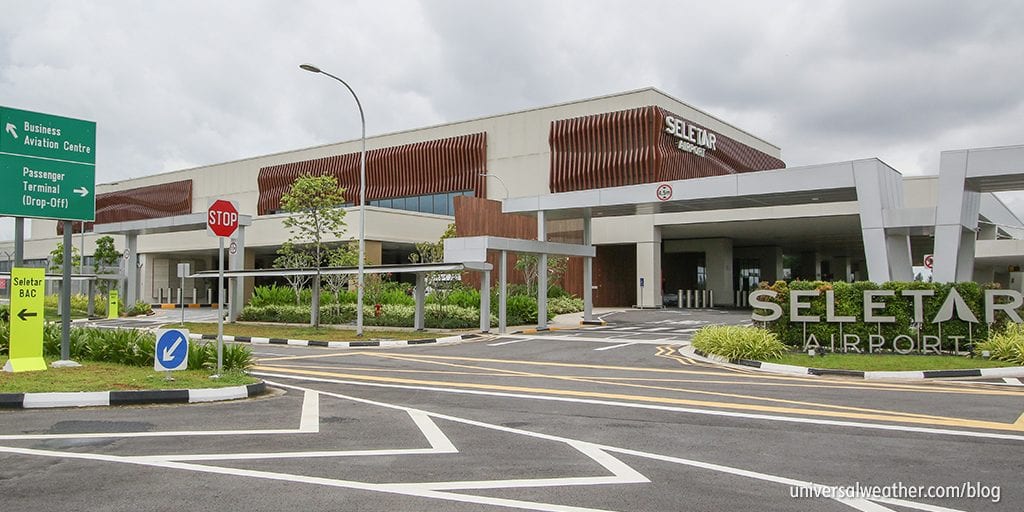
WSSL should be the first airport considered for most F1 missions.
Seletar is approximately 21 km from the Marina Bay Street Circuit. Normal drive times are manageable, but race-week road closures and heavier traffic around Marina Bay can add time to passenger and crew movements.
The main concern at WSSL is parking. Grand Prix traffic compresses a large number of business aviation movements into a relatively short period, increasing demand for aircraft parking, handling and passenger processing.
Operators should confirm parking early and avoid unnecessary schedule changes once arrangements are in place. If longer-term parking cannot be accommodated, repositioning may be required.
For more general operating information, see our Singapore business aviation destination guide.
Changi Airport (WSSS)
WSSS will be much harder to use during the event period.
From Oct. 4-13, F1 operators should plan around quick-turn operations for passenger pick-up and drop-off.
No layover will be facilitated unless the operator provides documentation demonstrating an operational requirement to remain at WSSS. Even then, operators should not assume a parking bay will be available.
Non-F1-related flights will not be permitted to operate to WSSS during the same period.
All GCR filings must include the following information in the SI:
- Lead passenger
- Business entity
- Reason for operating to WSSS
Diplomatic flights are not exempt from the filing process. Operators must provide the applicable permit approval number.
Ministry of Foreign Affairs permit approval does not account for bay availability, so operators should treat permit approval and airport accommodation as separate parts of the mission.
What trips operators up?
The biggest issue is waiting too long to decide whether WSSS is actually required.
Once the Sept. 30 deadline passes, moving a mission from WSSL to WSSS may no longer be possible, even if Changi becomes operationally preferable later.
There is also a tendency to treat one approval as if it clears the entire operation.
“One of the biggest mistakes is assuming that approval to operate means every other part of the mission is solved,” Hussain said. “Bay availability, aircraft parking, passenger handling and the operating schedule all still have to line up.”
That distinction matters most at WSSS, where filing acceptance, operational approval and bay availability are not the same thing.
CIQ, fuel and catering
Passenger and crew documentation should be completed accurately and as early as possible, particularly during peak arrival and departure periods.
Operators should avoid building tight connections between landing, CIQ processing and onward transportation. Additional F1 traffic can create delays even when the aircraft arrives as planned.
Fuel and catering should also be coordinated with the initial handling request rather than added close to departure. Demand can become concentrated around similar departure windows, especially following qualifying and the Sunday race.
Ground transportation
Road closures around Marina Bay and Singapore’s central business district are a separate planning issue from airport access.
Pre-arranged transportation is recommended, particularly for passengers arriving at WSSL. Operators should allow additional ground time when moving passengers or crew to Marina Bay hotels, the circuit or other city-center locations.
Traffic conditions can change considerably depending on road closures and event schedules, so normal Singapore drive times should not be used as the sole basis for race-week planning.
Hotels
Crew accommodations should be confirmed early.
Hotels closest to Marina Bay may seem like the obvious choice, but they can also be among the most difficult to access once race-related road closures are in place.
For crew, a hotel slightly farther from the circuit may make more operational sense if it provides easier airport access and avoids the most heavily restricted areas.
Availability and rates also tighten as race weekend approaches, so hotels should be handled alongside parking and ground transportation rather than left until the end of trip planning.
Final planning takeaway
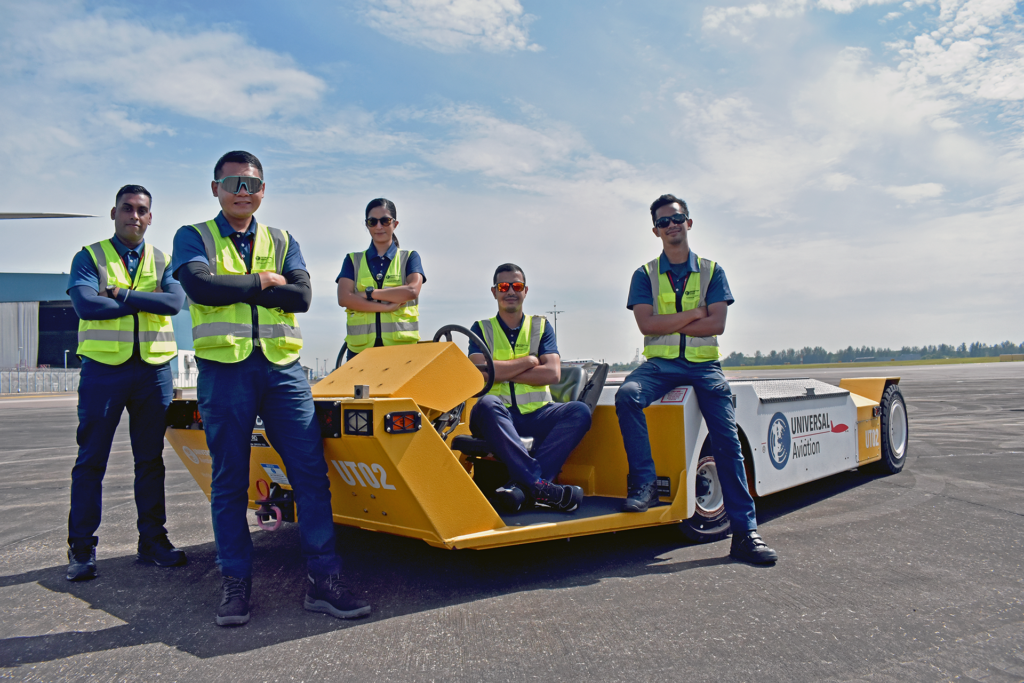
For most F1 missions, WSSL will be the practical airport choice.
If WSSS is required, that decision needs to be made early enough to meet the Sept. 30 filing deadline and work within the quick-turn and bay-availability restrictions.
The biggest risk is not necessarily an unusually complicated procedure. It is leaving an airport decision too late and finding that the remaining options no longer fit the mission.
Universal Aviation Singapore can support operators planning missions during the Grand Prix period.