


U.S. Ebola Travel Restrictions: What International Operators Need to Know
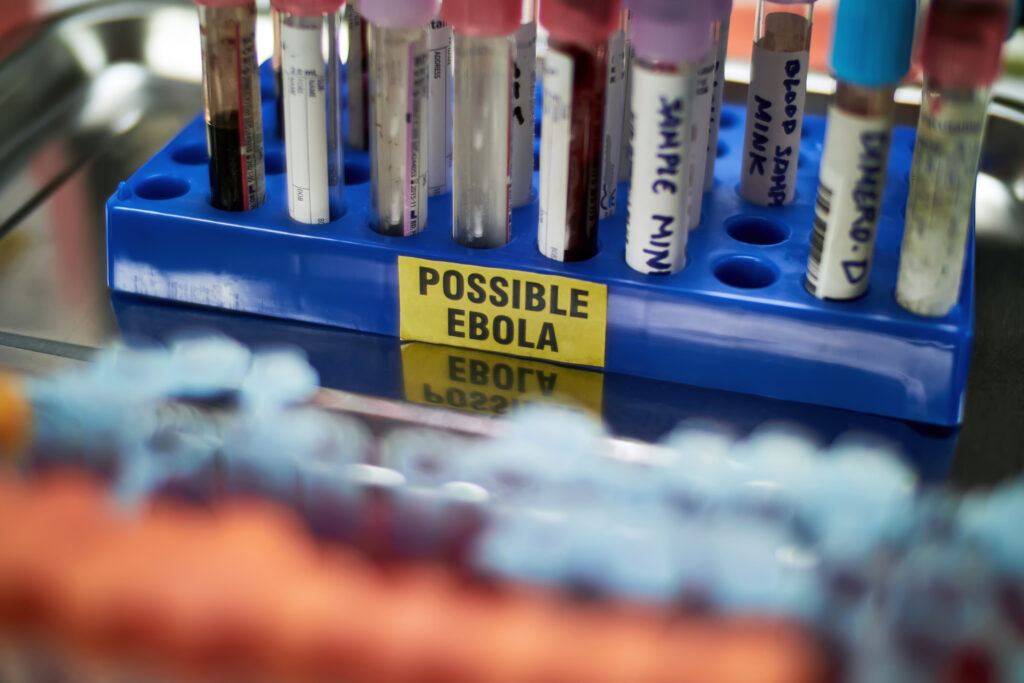
New U.S. carrier guidance dated August 17 significantly clarifies Ebola-related boarding and entry restrictions for travelers with recent travel history in the Democratic Republic of the Congo (DRC), Uganda, or South Sudan.
Key operational change: Anyone who has been in the DRC within the previous 21 days, including U.S. citizens and nationals, is currently prohibited from boarding a flight to the United States.
Uganda and South Sudan are treated differently. U.S. citizens and nationals who have recently been in either country may still travel to the United States, but they must enter through one of four designated airports. Foreign nationals, including lawful permanent residents, are not permitted to board until they have been outside Uganda or South Sudan for at least 21 days.
For international operators, passenger travel history is now a dispatch-critical planning variable. The aircraft’s point of origin alone does not determine whether the restrictions apply.
U.S. Ebola travel rules by country
Can someone who has recently been in the DRC fly to the United States?
No.
Travelers who have been in the DRC within 21 days of their U.S.-bound flight are currently not permitted to board.
This applies to:
- U.S. citizens
- U.S. non-citizen nationals
- Foreign nationals
Travelers should remain outside the DRC for at least 21 days before attempting to travel to the United States.
Does transiting through the DRC count?
Yes.
The current guidance specifically includes travelers with an intermediate stop in the DRC or a multi-stop itinerary through the DRC, regardless of whether they disembarked or remained onboard the aircraft.
Operator takeaway: A technical stop or intermediate landing in the DRC can trigger the 21-day restriction even when the traveler never leaves the aircraft.
What if the traveler has recently been in Uganda or South Sudan?
The answer depends on the traveler’s status.
U.S. citizens and nationals who have been in Uganda or South Sudan within the previous 21 days, but have not been in the DRC, may travel to the United States. They must enter through one of the following designated airports:
- KIAD – Washington Dulles International Airport
- KATL – Hartsfield-Jackson Atlanta International Airport
- KIAH – George Bush Intercontinental Airport
- KJFK – John F. Kennedy International Airport
Foreign nationals, including lawful permanent residents and family members, are not permitted to board U.S.-bound flights until they have been outside Uganda or South Sudan for at least 21 days.
Why this matters operationally
The biggest planning mistake is assuming Ebola-related restrictions are determined by where the aircraft is arriving from.
They are not.
Applicability follows the traveler.
A passenger joining a business aviation flight in London, Dubai, Paris, or another international gateway may still trigger U.S. restrictions because of commercial or private travel completed earlier in the previous 21 days.
Operators should verify:
- Passenger and crew travel history during the previous 21 days
- Any presence in the DRC, Uganda, or South Sudan
- Intermediate stops or multi-stop itineraries through the DRC
- Commercial itineraries completed before the current business aviation trip
- Citizenship and nationality of affected travelers
- Lawful permanent resident status
- Whether the planned U.S. arrival airport meets current requirements
- Travel history for last-minute passenger additions
Planning scenario: A passenger may board a business jet in Europe with no apparent connection to Central or East Africa, but a prior commercial itinerary through the DRC can still prevent that passenger from boarding the U.S.-bound sector.
What should operators do if a passenger is unexpectedly denied boarding?
The August 17 guidance also establishes a process for travelers who may have been incorrectly prevented from boarding because of Ebola-related travel restrictions.
Travel restriction and lookout statuses are dynamic. If a passenger reservation has become inactive, the carrier guidance recommends canceling the inactive reservation and creating a new reservation with a new PNR or record locator rather than simply updating the existing record.
This helps ensure the traveler is screened against the latest available travel restrictions.
If the travel inhibition appears to be specifically related to Ebola restrictions, carriers are instructed to collect identifying and travel information and email it to:
Ebola-Travel-HELP@hq.dhs.gov
Information DHS may request
- Full name
- Date of birth
- Sex
- Passport country and number
- All citizenships held
- Telephone number with country code
- Email address
- Current location
- Airport, airline, and flight associated with the denied boarding
- Future booked U.S. flight information, if applicable
- Whether the traveler has ever been in the DRC
- The date they most recently left the DRC
- Whether they previously booked and canceled travel to the DRC
- Whether they have been in Uganda or South Sudan
- The date of their most recent visit to Uganda or South Sudan
- Any other relevant information about the boarding denial
A letter from the U.S. Department of State or a U.S. Embassy is not required.
According to the carrier guidance, the traveler’s information will be sent to a government team authorized to adjudicate the case. Travelers should generally expect contact within 24 hours by telephone or from a .gov email address.
They should also be prepared to provide supporting documentation, such as passport exit stamps.
Important: This escalation process applies specifically to Ebola-related travel restrictions. Other boarding issues should continue through normal TSA Secure Flight or CBP Regional Carrier Liaison Group procedures.
Where operators are most likely to encounter problems
The most likely disruptions now come from incomplete or late passenger-history checks rather than the mechanics of airport screening itself.
Common failure points include:
- Discovering recent DRC travel after routing has already been finalized
- Assuming a DRC transit does not count because the traveler remained onboard
- Treating the DRC, Uganda, and South Sudan as subject to identical rules
- Failing to distinguish between U.S. citizens and foreign nationals
- Assuming lawful permanent resident status provides an exemption
- Adding passengers shortly before departure without reviewing 21-day travel history
- Using a non-designated U.S. airport for an eligible U.S. traveler recently in Uganda or South Sudan
- Relying on an inactive reservation after a previous boarding issue
Business aviation operators may be particularly exposed because passengers frequently combine scheduled airline travel with private aircraft movements.
The operational problem is often not discovering that a restriction exists. It is discovering too late that it applies to someone onboard.
What is the biggest planning takeaway?
Passenger and crew travel-history verification should occur before international routing is finalized and before APIS is submitted.
For U.S.-bound operations, operators should determine:
- Has anyone onboard been in the DRC during the previous 21 days?
- Has anyone been in Uganda or South Sudan during the previous 21 days?
- Did any itinerary include an intermediate stop or transit through the DRC?
- What is each affected traveler’s citizenship or immigration status?
- If a U.S. citizen or national has recently been in Uganda or South Sudan, is the flight routing through KIAD, KATL, KIAH, or KJFK?
- Has anything changed since the passenger information and APIS data were originally collected?
Bottom line: Operators need to know where everyone onboard has been during the previous 21 days and what traveler status applies before finalizing a U.S.-bound trip.