


Wimbledon 2026: Business Aviation Planning Guide
For more information on operating to the UK, visit our destination and regulatory guides:
Wimbledon sits inside a compressed London operating window where multiple airports are at or near capacity and business aviation demand is elevated across the entire region. That pressure shows up first in parking, then in how much freedom you actually have to move the aircraft once it is on the ground. At the same time, passenger itineraries spread across the city rather than anchoring at the venue in southwest London.
Planning links together. Parking determines whether the aircraft can stay or has to reposition. That changes how flexible the schedule really is. That, in turn, drives how ground transport needs to be built to keep the itinerary intact.
Wimbledon runs June 29 through July 12, 2026, at the All England Lawn Tennis and Croquet Club. During that period, operators should expect reduced parking availability and increased competition for business aviation services across all London-area airports. Summer operating limits remain in force and continue to shape when aircraft can move.
Does Airport Proximity Matter for Wimbledon Trips?
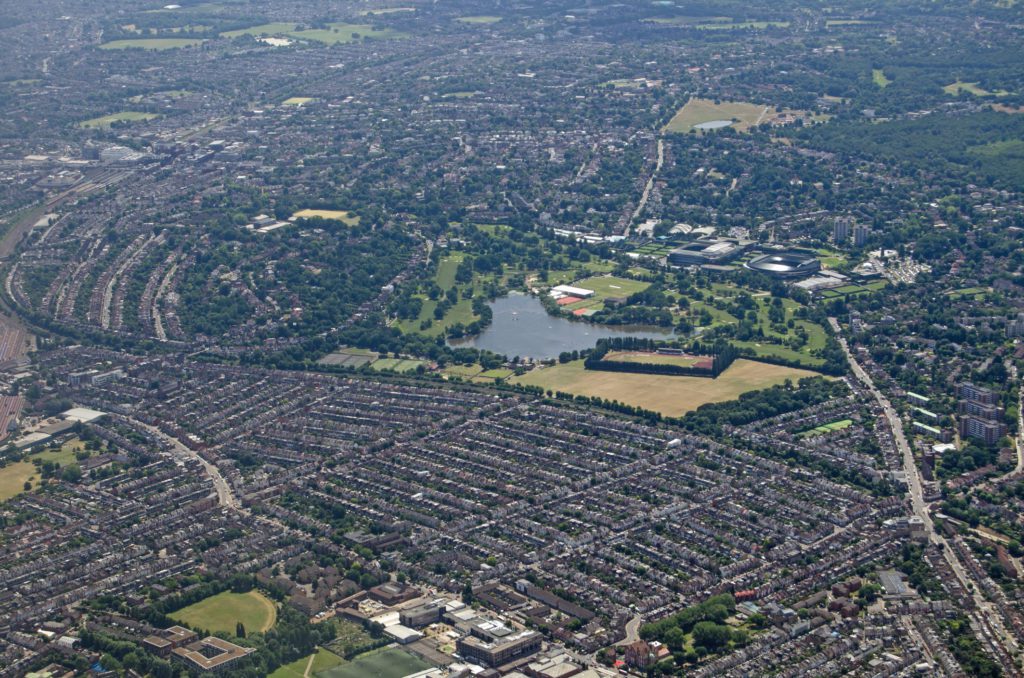
Aerial view of the South London district of Wimbledon. In the centre of the image is the lake of Wimbledon Park, just above are the grounds of the All England Lawn Tennis Club which hold the annual Grand Slam tennis tournament.
Proximity matters less than most operators expect. Most Wimbledon trips are not centered on the club. Passengers move between Central London hotels, meetings, client events, and selected tournament sessions across several days. The aircraft supports that full pattern, not a single transfer to southwest London.
“One of the most common misconceptions is that the airport closest to the event will automatically create the smoothest operation,” said Jason Hayward, Managing Director, Universal Aviation UK – Stansted. “For Wimbledon, operators are usually supporting a multi-day London itinerary. The airport decision needs to support the entire schedule, not just the drive to the tournament. The airport that provides the greatest operational flexibility often delivers a better overall outcome than one that saves a few minutes on a single transfer.”
Choosing an airport to shorten the Wimbledon transfer adds time everywhere else. A single 20-minute saving to southwest London turns into repeated crossings of the city for hotels, meetings, and dinners. That cost accumulates every time the car leaves the airport, and by the end of the trip the math rarely works in favor of the closer airport.
The right starting point is where passengers will actually spend their time, not where the event is held. When the wrong starting point is used, the operation spends the next few days compensating with longer transfers and tighter timing between stops.
Which Airport Is Best for Business Aviation During Wimbledon?
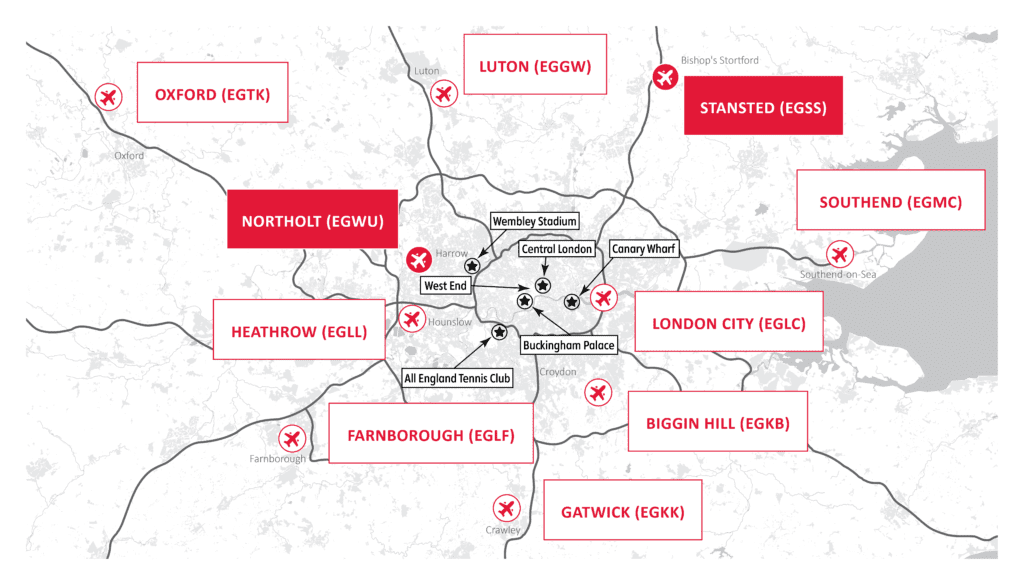
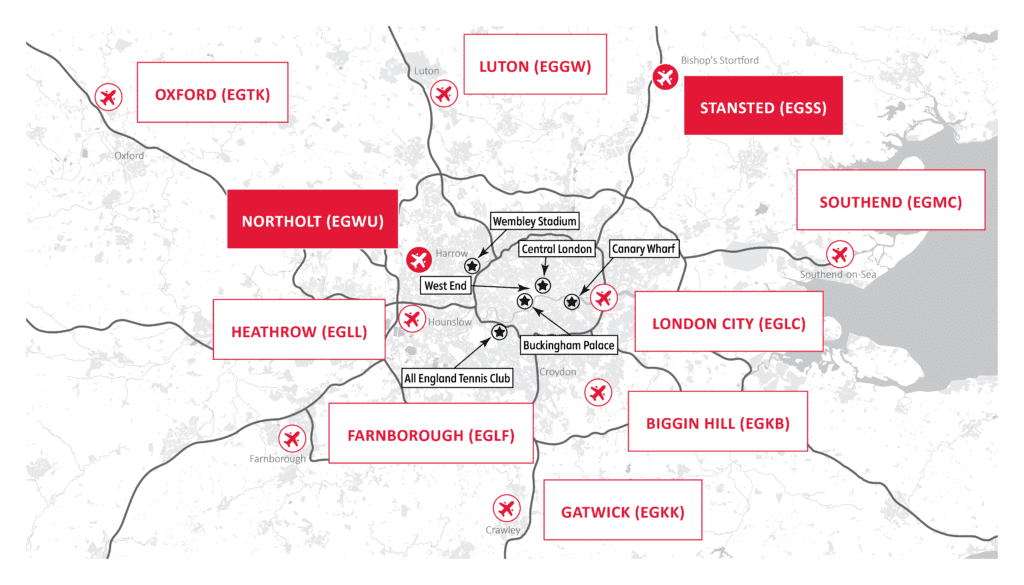
There is no single best airport for Wimbledon. The optimal choice depends on where passengers will spend their time, how long the aircraft will remain in the region, and how much schedule flexibility is required. Once the itinerary is visible, the airport decision becomes clearer.
London City (EGLC) works when time into Central London drives everything and the stay is short. The trade is restricted operating hours, limited parking, and performance constraints on the short runway and steep approach. When those limits are hit, there is not much room to adjust.
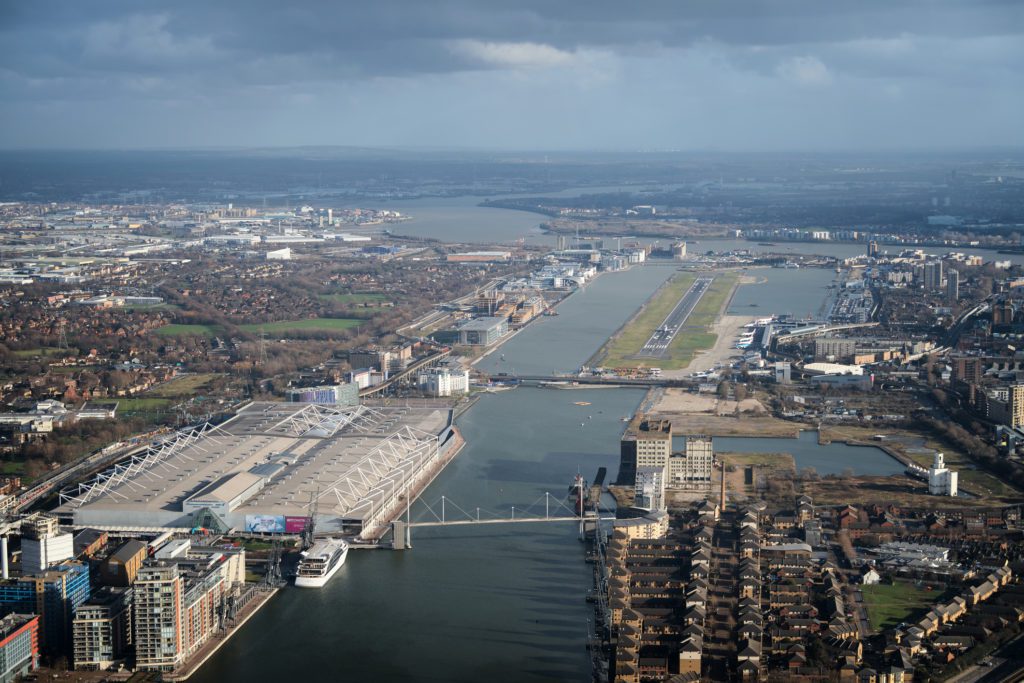
Looking down the runway at London City Airport.
- Stansted (EGSS) carries more of the long-stay and larger-aircraft traffic for a reason. It sits farther out, but it holds up better when plans move. The extra drive time is predictable. The operating environment is less likely to force last-minute changes. “For operators planning a multi-day stay in London, the discussion often shifts from proximity to flexibility very quickly,” said Hayward. “Stansted tends to work well for aircraft remaining in the region for several days because it offers more flexibility when schedules change, passengers extend their stay, or mission requirements evolve during the trip.”
- Luton (EGGW) sits in between. It gives access with more flexibility than London City, which matters once schedules start to move. That advantage only holds if parking is addressed early.
- Farnborough (EGLF) shifts the balance toward control on the aircraft side. The operating environment is cleaner and purpose-built for business aviation. The trade is ground time into the city. Over multiple days, that trade often stabilizes the rest of the mission.
- Biggin Hill (EGKB) comes into play when activity pulls south. For the right itinerary it can reduce repeated crossings of London. If the itinerary is not aligned that way, the advantage disappears quickly.
Trying to pick a universally best airport is what breaks this decision. The wrong pick forces tradeoffs between access, flexibility, and parking that cannot be recovered cleanly once demand tightens.
How Does Parking Affect Wimbledon Flight Operations?
Parking is the primary operational constraint during Wimbledon, not distance to the venue. It tightens across London during the tournament because the event overlaps broader summer demand, compressing options across all airports simultaneously.
The failure sequence is consistent. The airport is selected based on location. Parking is assumed to follow. Demand builds, availability compresses, and the confirmation either does not come through or comes with conditions that restrict how the aircraft can be used. The operator then has to reposition late in the process.
That single shift propagates. Ground transport has to be rebuilt around a different airport. Timings that were already tight get tighter. The aircraft is now moving in an already constrained environment with fewer options.
Move parking to the front of the plan. Confirmation timing, the likelihood of repositioning, and viable alternates all need to be tested before committing to the airport. When that step is delayed, the operation gives up control at the point when the market is least forgiving.
The end state is predictable. The aircraft is constrained for several days while the passengers were at the tournament for a few hours.
How Should Operators Handle Ground Transport During Wimbledon?
Ground transport should be treated as part of the operational plan, not a separate service layer. During tournament days, London road movement becomes the limiting factor passengers feel most directly, and map distance does not reflect how the city moves under peak congestion.
The nearest airport is selected to reduce drive time to Wimbledon. Ground transport is built on expected travel times. Congestion extends each segment. The buffer disappears across hotel, meeting, and event transitions. By the time the car reaches the tournament, the earlier gains are gone.
The constraint was never distance. It was movement across the city during a peak demand window.
Passenger hotel locations, meeting schedules, and tournament attendance times all need to be aligned before the airport is finalized. When ground transport is treated as an afterthought, it ends up dictating the day anyway.
What Holds a Wimbledon Operation Together?
Successful operations during Wimbledon are built around the full London itinerary from the start. Parking is secured with contingencies. The airport is chosen for how it supports several days of movement, not a single transfer. Ground transport is aligned to the actual sequence of passenger activity.
The consistent reality is that the aircraft operates inside constrained airport conditions for multiple days while the passengers spend limited time at the tournament. When the plan favors the short drive to southwest London over where the aircraft can reliably sit and move, the operation spends the rest of the trip working around that decision.
Frequently Asked Questions
- How far in advance should operators secure parking for Wimbledon? As early as possible, and earlier than feels necessary. London parking across all business aviation airports tightens during the summer season, and Wimbledon adds concentrated demand on top of that. Operators who treat parking as a follow-on detail often find themselves repositioning late with limited options.
- Does Wimbledon affect airports beyond the closest ones to the venue? Yes. Demand rises across the entire London business aviation market during the tournament period, including Stansted, Luton, Farnborough, Biggin Hill, and London City. Operators should not assume that airports farther from the venue will have open capacity.
- What is the most common mistake operators make planning Wimbledon trips? Starting with the airport nearest to the All England Club rather than mapping the full passenger itinerary first. The tournament is typically one element of a multi-day London trip. Airport decisions made around a single transfer often create friction across every other movement.
- Is Farnborough or Stansted better for Wimbledon? It depends on the mission profile. Farnborough offers a cleaner business aviation operating environment and greater operational control. Stansted handles larger aircraft and longer stays with more flexibility on the operating side. Neither is universally superior. The right choice follows from the itinerary, aircraft type, length of stay, and expected schedule variability.
- Can operators use London City Airport for Wimbledon trips? Yes, but with important caveats. London City works well for short stays with Central London-focused itineraries and the right aircraft type. Restricted operating hours, limited parking, and runway performance constraints mean it offers less flexibility when plans change. It is not well suited for longer stays or missions with meaningful schedule variability.