


Middle East Airspace Closures: Operational Impact on Business Aviation and GA Flights
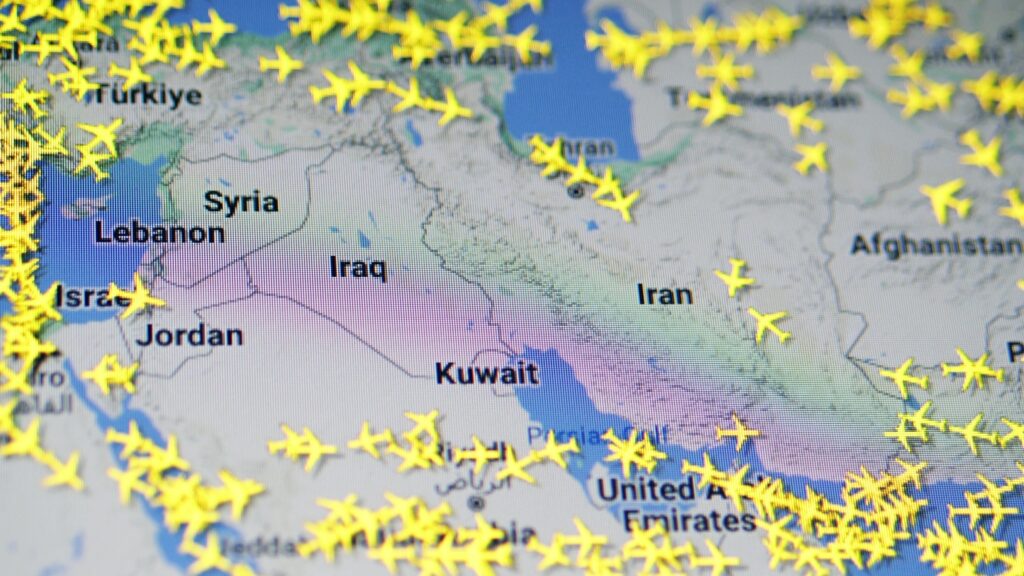
Current Operational Snapshot
The regional security situation has deteriorated again, prompting EASA to expand its conflict-zone guidance across the Gulf.
Most Middle East FIRs remain technically open. However, EASA now recommends that applicable operators avoid operating at any altitude or flight level within:
- Bahrain FIR
- Kuwait FIR
- Qatar FIR
- UAE FIR
- The Gulf of Oman within Muscat FIR west of longitude 58°E
EASA CZIB-2026-07 was issued July 14 and is currently valid through July 29, 2026, unless reviewed earlier.
Separate EASA bulletins for Iran, Iraq and Lebanon remain in effect through Aug. 31 and continue to recommend avoiding their FIRs at all levels. Syria remains covered by a separate avoidance bulletin through Oct. 31.
Israel, Jordan, Oman and Saudi Arabia are covered by an EASA Information Note. That note does not recommend avoiding their FIRs, but operators are advised to account for the potential risk when conducting risk assessments and selecting routings.
The EASA guidance applies directly to operators subject to Commission Regulation (EU) 965/2012 and EASA-authorized third-country operators when operating under their TCO authorization to, from or within the EU. Other operators should review applicable state guidance, insurer requirements, security assessments and internal conflict-zone policies.
The central planning issue is no longer whether a FIR is open. It is whether the exact route is operationally available and acceptable under the operator’s regulatory and risk framework.
What Changed
The most important developments since the previous update are:
- EASA now recommends avoiding Bahrain, Kuwait, Qatar, UAE and the affected portion of the Gulf of Oman at all levels.
- EASA issued a separate Information Note covering Israel, Jordan, Oman and Saudi Arabia.
- Bahrain introduced temporary routes for certain overflight traffic through July 18.
- Kuwait extended its restriction limiting the FIR to arriving and departing traffic through at least Aug. 4.
- UAE directional airway restrictions remain in effect through at least July 21.
- Saudi Arabia extended its contingency fuel advisory through at least July 27.
Current FIR Status
Azerbaijan
Azerbaijan remains open with no routing restrictions currently in place.
Operators should continue monitoring Iran and other adjacent FIRs because regional restrictions can affect onward route availability.
Bahrain
Bahrain FIR remains technically open, with temporary routes in place through July 18 for traffic normally routed through LADNA, NARMI or DAROR on N318, N685, M722, B457, M556 and P559.
Affected flights must use alternative routings based on origin and destination:
- Jeddah FIR to northern UAE: DAROR M708 TOBRO M677 OBNET
- Jeddah FIR to southern UAE: ROTEL N572 DAVRI L704 KARUG
- Jeddah FIR to Qatar: ROTEL N572 DAVRI L704 BORUK
- Qatar to Jeddah FIR: OBROS L768 ULADA
- Qatar to Kuwait: EGNIM M600 KUMBO
Other traffic should continue filing in accordance with the Bahrain Standard Route Document. Tactical flow-management measures may be applied.
Despite these available routes, EASA currently recommends that applicable operators avoid Bahrain FIR at all levels.
Iran
Iran remains partially available but highly restricted.
Current restrictions suspend all general aviation and most VFR operations. Limited exceptions apply to specified training flights, hospital and search-and-rescue missions, state and military operations, approved VFR flights and certain IFR flights requiring a VFR transition at airports without navigation aids.
Transit restrictions also remain in place:
- N39 is closed between DEMBA and OBRIX for transiting flights.
- G208/L125 is closed between RADAL and IKA VOR/DME for transiting flights.
- Published alternate routings and minimum flight levels apply.
EASA continues recommending that applicable operators avoid Tehran FIR at all levels through Aug. 31.
Iraq
Iraq FIR remains technically open, with expected routings available.
However, EASA continues recommending that applicable operators avoid Baghdad FIR at all levels through Aug. 31.
The existence of an available or accepted flight plan should not be treated as confirmation that the route is acceptable under the operator’s conflict-zone policy.
Israel
Israel has no conflict-specific NOTAMs currently published.
Several airways remain closed, restricted or available only through ATC coordination. Israel is covered by the EASA Information Note, which advises operators to account for the potential risk before operating.
Operators should validate individual route segments and monitor airport, airway and security conditions closely.
Jordan
Jordan remains open with no routing restrictions currently in place.
Jordan is covered by the EASA Information Note. Operators should consider the potential risk and monitor developments in neighboring Israel, Syria, Iraq and Saudi Arabia.
Kuwait
Kuwait remains one of the most constrained Gulf FIRs.
Kuwait FIR is available only for flights arriving to or departing from Kuwait, subject to prior approval from the Kuwait DGCA Air Transport Department. Overflights remain prohibited through at least Aug. 4.
Departures from OKKK must use designated routings based on destination. Available routes include:
- NIDAP L550
- DEKOB P517
- KATOD G667
- ASVIR H741
Arrivals to OKKK must use one of the following entry routes:
- SOROR A788
- KUNRU P891
- KUMBO A453
- H741 ASVIR
Operators should plan for prior approval, mandatory routing structures, tactical ATC measures and additional fuel for delays or diversions.
Kuwait is open only for Kuwait-related traffic. It is not available as a normal transit FIR. EASA also recommends avoiding Kuwait FIR at all levels.
Lebanon
EASA continues recommending that applicable operators avoid Beirut FIR at all levels through Aug. 31.
The key question is not whether a route can technically be filed. It is whether Lebanese airspace is acceptable under the operator’s regulatory, insurance and conflict-zone requirements.
Oman
Oman has no conflict-specific NOTAMs currently in place, but EASA applies two different risk levels within Muscat FIR.
The Gulf of Oman west of longitude 58°E is included in the EASA avoidance bulletin through July 29. The remainder of Muscat FIR is covered by the EASA Information Note.
Operators should review the precise route coordinates rather than treating all Omani airspace as having the same risk classification.
Qatar
Qatar currently has no state routing restrictions in place.
However, EASA recommends that applicable operators avoid Doha FIR at all levels through July 29.
This is one of the clearest examples of the distinction between airspace availability and conflict-zone risk guidance.
Saudi Arabia
Saudi Arabia remains open and operational.
A current NOTAM advises inbound traffic and flights operating within Jeddah FIR to carry sufficient fuel for potential delays or diversions through at least July 27.
Saudi Arabia is also covered by the EASA Information Note. Operators should maintain additional contingency fuel and more than one viable routing scenario.
Syria
Damascus FIR remains technically open but subject to numerous routing and flight-level restrictions.
EASA maintains a separate bulletin recommending that applicable operators avoid Damascus FIR at all levels through Oct. 31.
Syria should not be treated as normal transit airspace, even where published routes remain available.
UAE
Emirates FIR remains technically open but subject to routing restrictions through at least July 21.
Current restrictions include:
- M318 between ATUDO and GOLGU is available westbound only.
- The special authorization requirement is suspended for M318 between ATUDO and GOLGU and for M550.
- UAE departures entering Jeddah FIR should file M318 M550 RIBOT.
- L710 between UKRAG and MEMTU is suspended.
Operators should plan for directional limitations, longer routings, tactical reroutes and dependency on adjacent FIR availability.
EASA currently recommends that applicable operators avoid Emirates FIR at all levels.
Common Failure Points
The biggest planning mistake is assuming that an open FIR means normal operating conditions.
A FIR may be technically open while still being:
- Covered by an EASA avoidance recommendation
- Restricted to arrivals and departures
- Closed to overflights
- Subject to prior approval
- Limited to directional route use
- Affected by suspended airways
- Subject to tactical ATC flow measures
Common disruption points include:
- Short-notice NOTAM changes
- Tactical reroutes
- Permit revisions after routing changes
- Compressed traffic through fewer corridors
- Insufficient contingency fuel
- Loss of diversion or alternate flexibility
- Routes entering a small portion of a CZIB-covered maritime area
Operator Guidance
Operators should:
- Determine which regulatory and conflict-zone advisories apply.
- Validate the entire route immediately before departure.
- Review NOTAMs across adjacent FIRs, not only those being entered.
- Confirm whether each FIR permits overflight, arrival and departure traffic or restricted corridor use.
- Check directional airways and suspended route segments.
- Confirm whether the route enters the Gulf of Oman west of 58°E.
- Carry additional contingency and diversion fuel.
- Build multiple routing scenarios before filing.
- Reconfirm permits and approvals after any route change.
- Identify alternates outside the most constrained corridors.
- Monitor state, EASA, insurer and operator-specific guidance.
Routing validation is not a one-time planning task in the current environment. It is a departure-critical process.
Expert Perspective
“The biggest mistake operators are making is assuming that an open FIR means normal operating conditions. Across much of the region, traffic is moving through tightly managed routing systems that depend on approvals, published corridors, neighboring FIR availability and tactical ATC measures. The airspace may be technically available, but that does not mean the route is acceptable under the operator’s conflict-zone policy or that normal flexibility has returned,” says Greg Murray, Master Flight Planner, Universal Weather and Aviation.
Bottom Line
The Middle East airspace environment remains operational in many locations, but it is not normal.
EASA now recommends that applicable operators avoid Bahrain, Kuwait, Qatar, UAE and the Gulf of Oman west of 58°E at all levels through July 29.
Iran, Iraq and Lebanon remain under separate EASA avoidance recommendations through Aug. 31. Syria remains covered through Oct. 31. Israel, Jordan, Oman and Saudi Arabia are covered by an Information Note advising operators to account for the potential risk.
At the operational level, Bahrain has introduced temporary routes, Kuwait continues prohibiting overflights, UAE airway restrictions remain in place, Saudi Arabia continues advising additional fuel, and Iran remains partially available but highly restricted.
The region is not uniformly closed. It is a combination of technically open airspace, restricted corridors, temporary routes, prior approvals, suspended airways and conflict-zone advisories.
Every route should be evaluated at the segment level and revalidated immediately before departure.